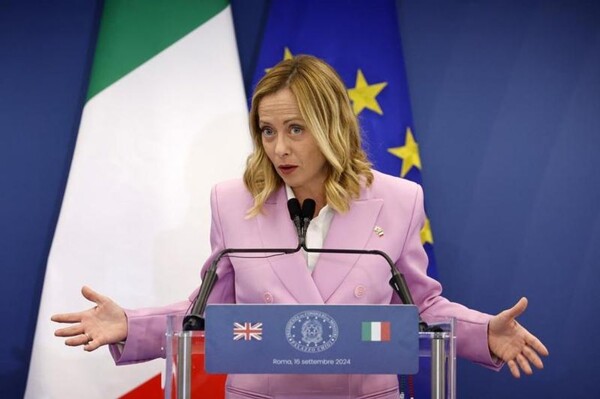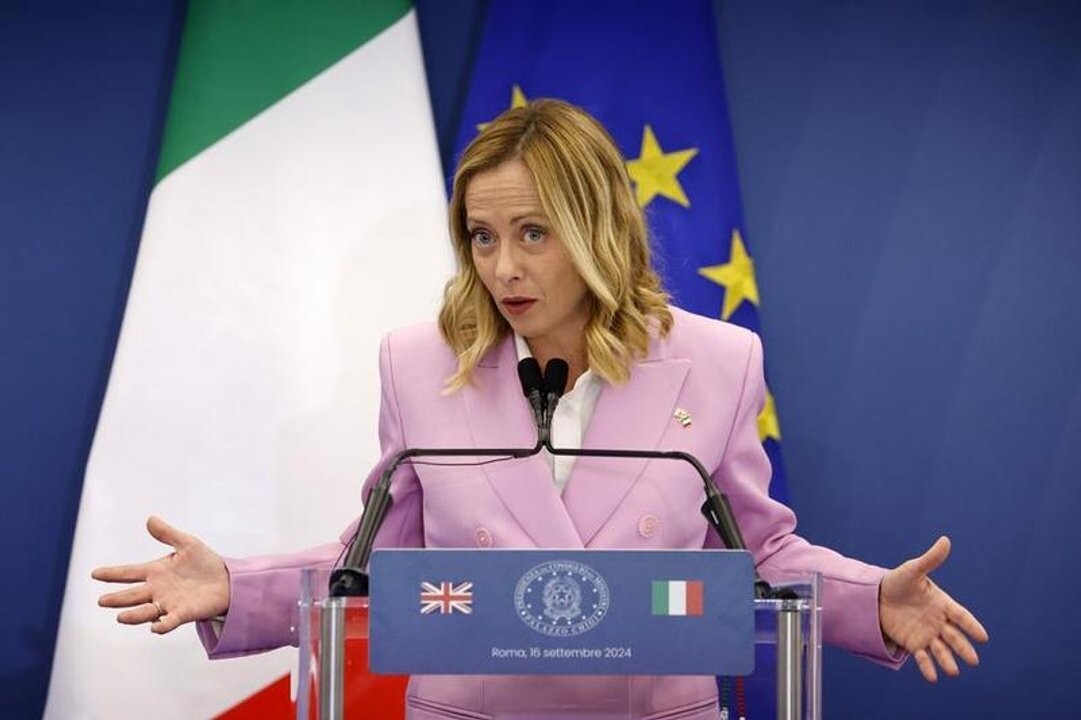
In Italy, the 'No' to the judicial reform has won. Even the enormous popularity of Giorgia Meloni could not convince citizens to validate her proposal in a constitutional referendum put forward by her party. The 'No' was prevailing with 54.1% of the votes, backed by a coalition of parties opposed to the Italian prime minister, thus nullifying the bill that sought to separate the careers of judges and prosecutors and modify the Higher Council of the Magistracy (CSM) in that country.
The Italian-Argentine lawyer Gonzalo Mazza underlined the unity of the opposition to Meloni, which had to come together to defeat her proposal, demonstrating that the prime minister remains fundamental to Italian politics.
Meloni tried to present the consultation as a technical reform, avoiding getting too directly involved in the campaign at the beginning. However, the figure of Giorgia Meloni, who has restored global prominence to Italy through the implementation of center-right policies, attempted to cross a very deep Rubicon that did not allow her to reach the other shore as Julius Caesar did in his days. Meloni, who considers herself a great friend and ally of Argentine President Javier Milei, within that diverse group of leaders that make up the world's 'New Right', suffered a defeat that does not mean the collapse of her government, but it is a resounding call to attention from the citizenry that has drawn a red line that she should not cross.
The Italians who participated in the referendum, including the thousands of citizens who voted and live in Argentina, mostly preferred that the Constitution not be manipulated. A government that had shown remarkable political and parliamentary stability until now received a significant blow in one of the most ambitious chapters of its reformist agenda.
For Mazza, Argentina and the Milei government will continue to have an ally in Rome: 'This does not, in itself, imply an institutional crisis nor does it put the continuity of Meloni's government at immediate risk. But it does represent a significant brake on her reformist push and could push her into a more defensive position regarding future reform attempts, especially on constitutional or institutionally sensitive issues.'
The Italian professor at the University of Surrey, Daniele Albertazzi, does not see it the same way. For him, the result is 'a very, very bad result because Meloni lost the Italian electorate on a central issue of her manifesto.'
The international economic analyst and UBA professor, Nicolás Yassi, stated that 'the image of invincibility of Giorgia Meloni begins to blur' and 'could share a trait with what happens with leaders of the new right worldwide.' However, the united opposition progressively managed to install the idea that this vote was also a political evaluation of the government, and that ended up forcing Meloni herself to intervene more actively in defense of the 'yes,' he explained.
In the times of the '90s right, it was a request from Silvio Berlusconi, who denounced many times a 'persecution by left-wing judges.' For the current Minister of Justice, Carlo Nordio, the internal functioning of the judiciary is almost a 'para-mafioso mechanism.' The international law specialist, Gonzalo Mazza, an analyst of Italian politics, emphasized to the Argentine News Agency that 'Politically, the result is configured as the first major electoral defeat of the ruling government since Meloni came to power in 2022. The objective was clear: not to turn the referendum into a plebiscite on her leadership. It is the first great failure of the right-wing coalition that governs Italy with relative stability since October 2022. Because in Italy, prime ministers do not usually last that long, and their challenges to stay in power are enormous. The reform was not a novel topic.'