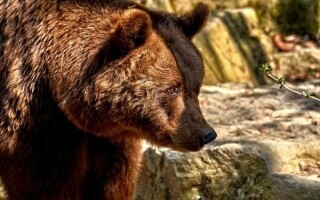
The destruction of natural habitats and the over-exploitation of resources are among the main factors that have altered the course of natural selection, contributing to the decline of some species and changes in their physical and behavioral traits. The Apennine brown bear (Ursus arctos marsicanus) is a small, isolated population living in central Italy with a long history of coexistence with humans. The results showed a decrease in genetic diversity and an increase in inbreeding rates. Researcher Julia Fabry from the University of Ferrara pointed out that the most significant discovery was the presence of selective genetic indicators linked to a reduction in aggression. She suggested that humans may have indirectly contributed to the survival of the calmest individuals by eliminating the most aggressive ones. A recent genetic study has revealed that Italian bears, living in areas with high human population density, have undergone remarkable evolutionary changes, making them smaller in size and less aggressive compared to their counterparts in other regions. According to the Italian journal 'Molecular Biology and Evolution,' citing local researchers, human activity played a pivotal role in shaping these changes. The study explains that humans have long been part of the environment inhabited by these animals, which has radically impacted ecosystems and biodiversity. Previous research indicates that these bears separated from other European brown bears about 2,000 to 3,000 years ago and have lived in near-total isolation since the Roman era. Evolutionary biologist Andrea Binatto from the University of Ferrara stated that deforestation related to agricultural expansion and population growth were likely the main reasons for the decline in these bears' numbers and their long isolation. The study shows that today's Apennine bears differ significantly from others in terms of body size, skull and muzzle structure, and also exhibit less aggressive behavior compared to brown bears in Europe, North America, and Asia. The researchers relied on creating a high-quality reference genome for the Apennine bear, conducted a comprehensive analysis of the full genomic sequence, and then compared the results with the genomes of bears from Slovakia and the United States.